Deye Battery System
Προβάλλονται όλα - 7 αποτελέσματαSorted by latest
-
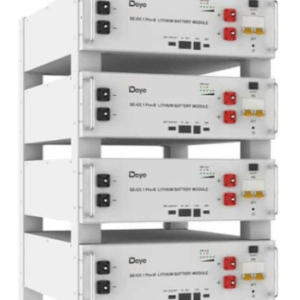
SE-G5.1 PRO-B-5.12kWh
€965.00SKU: 200383
Stock status: In stock
-
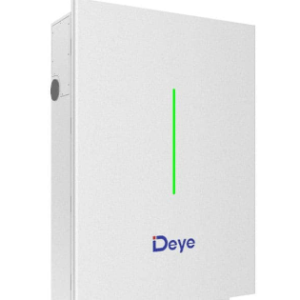
RW-F10.2 – 10.2kWh
€2,014.00SKU: 200384
Stock status: Out of stock
-
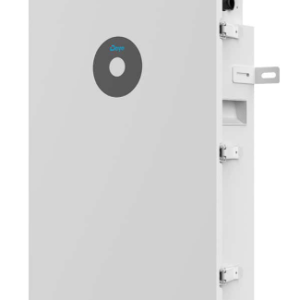
RW-F5.1 – 5.1kWh
€1,058.00SKU: 200396
Stock status: Out of stock
-
GB-L-PRO-4kWh
€1,010.71SKU: 200385
Stock status: In stock
-
GB-LBS-PRO (Controller)+GB-BASE
€700.00SKU: 200386
Stock status: In stock
-

SE-F12 MAX 11.8kWh / IP65
€2,053.80SKU: 700084
Stock status: In stock
-
SE-F16 MAX 16kWh / IP65
€2,407.91SKU: 700085
Stock status: In stock
Deye manufactures a focused range of residential lithium batteries built specifically to integrate with Deye hybrid inverters, and this selection at Trikkis Energy covers the core ESS battery models most relevant to Cyprus solar installations. Each storage system in this category operates at low voltage, making installation straightforward and compatible with single-phase and three-phase hybrid inverter configurations across a wide range of residential build types.
The RW series offers stackable capacity from 5.1kWh to 10.2kWh, giving households the flexibility to scale their energy storage solution as consumption demands change over time. Alongside those, the GB-L-PRO at 4kWh and the SE-G5.1 PRO-B at 5.12kWh provide compact, wall-mounted alternatives suited to properties with limited installation space.
Pairing Deye batteries with a compatible Deye inverter creates a fully integrated solar and backup energy storage system, where the inverter and ESS communicate natively to optimise self-consumption, grid charging cycles, and backup power delivery without additional configuration. Trikkis Energy stocks all five models in Cyprus, available to order online or via a custom project quote.
What Deye battery models are available at Trikkis?
Trikkis Energy stocks five models: the SE-G5.1 PRO-B at 5.12kWh, the RW-F5.1 at 5.1kWh, the RW-F10.2 at 10.2kWh, the GB-L-PRO at 4kWh, and the GB-LBS-PRO controller with base unit. Each suits different installation sizes and capacity requirements, from compact single-room backup systems to full residential energy storage solutions.
How does a Deye battery storage system work?
The battery connects to a Deye hybrid inverter, which manages the flow of energy between solar panels, the battery, household loads, and the grid. During the day, surplus solar power charges the battery. After sunset, stored energy powers the home. If the battery depletes, the inverter switches seamlessly to grid supply or backup mode.
Can Deye batteries be used with other inverter brands?
Deye batteries are optimised for use with Deye hybrid inverters and communicate natively via the inverter's BMS protocol. While some models may be compatible with third-party inverters that support standard communication protocols, full functionality, including intelligent charge scheduling, backup switching, and remote monitoring, is only guaranteed when paired with a compatible Deye solar inverter.
What is the difference between the RW and GB series Deye batteries?
The RW series, including the RW-F5.1 and RW-F10.2, is a rack-mounted stackable format suited to installations where capacity may be expanded over time. The GB series, including the GB-L-PRO and GB-LBS-PRO, uses a wall-mounted format better suited to compact spaces. Both series use lithium chemistry and integrate with Deye hybrid inverter systems via the same BMS communication protocol.
Do Deye batteries provide backup power during grid outages?
Yes, when paired with a compatible Deye hybrid inverter configured for backup operation. During a grid outage, the inverter disconnects from the grid and draws power from the battery to supply critical loads. The switchover is typically automatic and near-instantaneous, meaning appliances continue operating without interruption for the duration the stored energy allows.
How long do Deye lithium batteries last?
Deye lithium batteries are rated for a minimum of 6,000 charge and discharge cycles at standard conditions, which equates to roughly 15 to 20 years of daily cycling in a residential solar application. Actual lifespan depends on depth of discharge, ambient temperature, and charge rates. Operating within recommended parameters, as managed automatically by the Deye inverter, preserves cycle life most effectively.
Can I expand my Deye battery capacity after installation?
Yes, the RW series is designed for modular expansion. Additional battery units can be added to an existing installation to increase total storage capacity, provided the hybrid inverter supports the expanded configuration. This makes the RW-F5.1 a practical starting point for households that want to begin with a smaller system and scale up as their energy needs or budget allows.
Why are Deye batteries well suited to Cyprus solar installations?
Cyprus properties typically generate substantial solar surplus during peak summer months but face high grid electricity costs during morning and evening hours when panels are inactive. A Deye battery storage system captures that surplus and deploys it precisely when grid draw would otherwise occur, reducing bills significantly. The native integration between Deye batteries and Deye inverters also simplifies installation and ongoing monitoring for Cyprus-based solar installers.
What types of batteries are available?
There are two main types of batteries: Low Voltage (LV) and High Voltage (HV). LV batteries are used with single-phase inverters, while HV batteries are used with three-phase inverters. Up to 32 LV batteries can be installed, reaching storage capacity of up to 512 kWh. Up to 6 HV batteries can be installed per tower, with the ability to parallel up to 10 towers, reaching a total of 240 kWh.