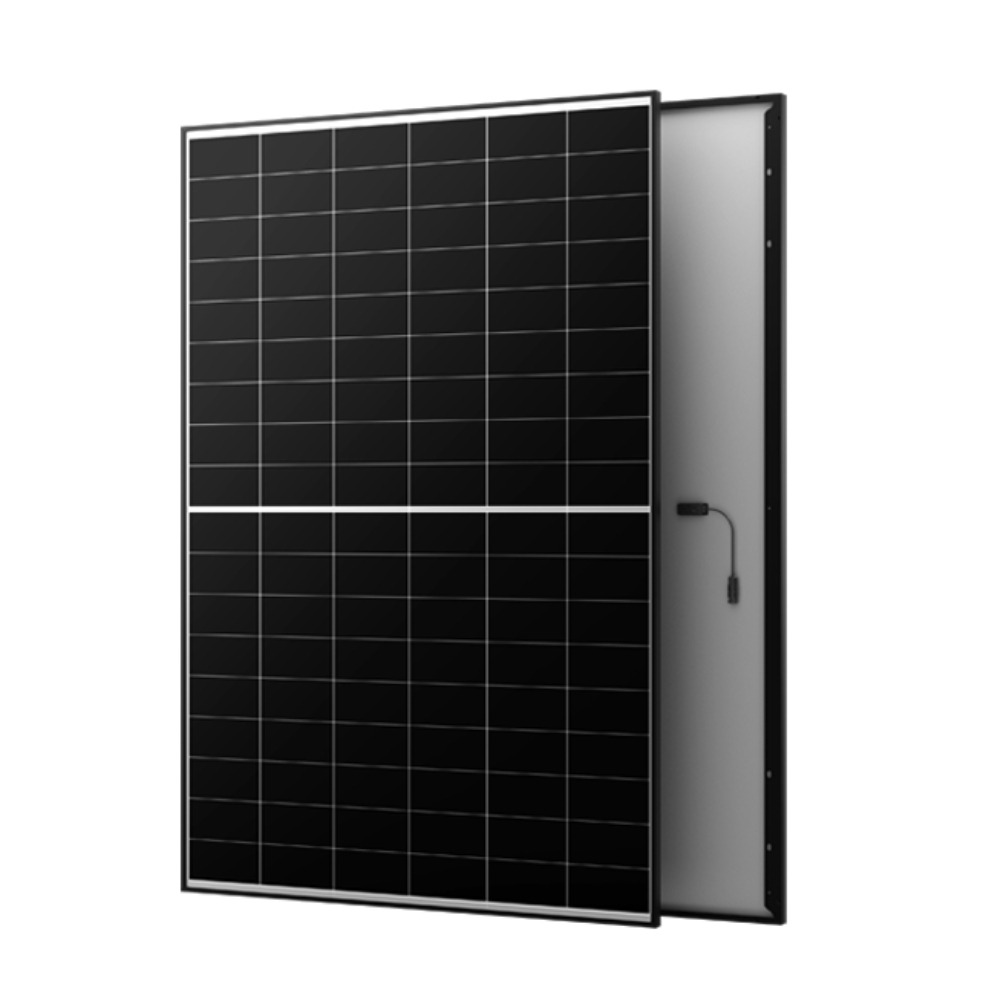
The Best Solar Panels in 2026: Top Picks from Trikkis Energy
To choose the best solar panels in 2026, it’s not enough to look at price alone. You need to compare efficiency, cell technology, long-term durability, temperature coefficient, and of course the warranties and technical support you’ll have after purchase. Especially for homes and businesses in Cyprus, how a panel behaves at very high temperatures and having direct access to service are the two most critical factors for a long-term investment.
In this guide, we compare six top panels from the Jinko Solar, REC, and AIKO ranges, imported and distributed island-wide by Trikkis Energy. These options cover every need: from simple residential roofs and large commercial installations to ground-mount systems and premium-aesthetic solutions with fully black panels.
In short: The ideal solar panels for Cyprus’s climate in 2026 are high-efficiency monocrystalline panels using N-type, HJT, or ABC technology. These panels withstand heat, show minimal degradation over the years, and come with substantial warranties.
If you’re looking for the top panel based on your specific use case, our recommendations from the Trikkis Energy range are:
- JINKO Tiger Neo N-Type 625W for top overall power output.
- REC 620 Alpha Pro-M for demanding commercial projects.
- JINKO Tiger Neo 590W (Bifacial) double-sided, for large roofs and solar parks.
- JINKO Tiger Neo 485W as the most practical solution for homes.
- REC Alpha Pure-R 410W for residential roofs where all-black aesthetics are a priority.
- AIKO N-Type 475W (Bifacial, ABC) for maximum aesthetics and efficiency without compromise.
How We Evaluated the Panels
To arrive at the 6 best models, we relied on six purely practical criteria: rated power, real-world efficiency, cell technology, heat performance (temperature coefficient), warranty length, and suitability for Cyprus’s weather conditions. We gave clear priority to cutting-edge technologies (N-type, HJT, and ABC) that guarantee low annual performance loss and are backed by Trikkis Energy’s official service network on the island.
Other brands not imported by Trikkis Energy, such as Aiko Solar (n.b. outside the range distributed locally) or SunPower Maxeon, are mentioned in this guide for comparison purposes only, as we believe direct local warranty support and parts availability are just as important as technical specifications.
The 6 Best Solar Panels in Cyprus for 2026
Quick Comparison
| Panel Model | Power | Efficiency | Cell Type | Temperature Coefficient | Performance Warranty | Best For |
|---|---|---|---|---|---|---|
| JINKO Tiger Neo N-Type 625W | 625 Wp | 22.18% | N-type mono | -0.29%/°C | 30 years | Roofs with demanding requirements & commercial systems |
| REC 620 Alpha Pro-M | 620 Wp | 21.8% | Bifacial HJT | -0.24%/°C | 25 years | Commercial projects & limited spaces |
| JINKO Tiger Neo 590W | 590 Wp | 22.84% | N-type bifacial | -0.29%/°C | 30 years | Large industrial roofs & solar parks |
| JINKO Tiger Neo 485W | 485 Wp | 21.88% | N-type mono | -0.29%/°C | 30 years | Classic residential installations |
| REC Alpha Pure-R 410W | 410 Wp | 22.2% | HJT half-cut | -0.24%/°C | 25 years | Premium residential roofs (All-Black) |
| AIKO N-Type 475W (Bifacial ABC) | 475 Wp | 23.8% | N-type ABC back-contact, bifacial | -0.26%/°C | 30 years | Premium aesthetics + efficiency |
1. JINKO Tiger Neo N-Type 625W: The Overall Top Choice
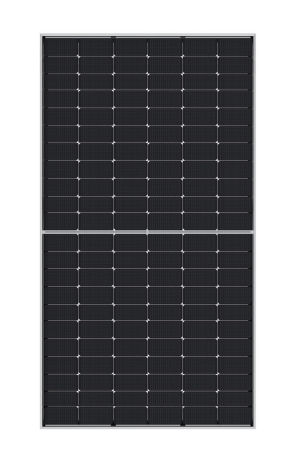
With an impressive 22.18% efficiency and 625 Wp of power, the JINKO Tiger Neo 625W is Trikkis Energy’s flagship model. This efficiency rating means, in practice, that you get more kilowatt-hours per square meter. It’s the ideal solution for roofs with limited space, where every centimeter counts toward reaching the power output you need.
Jinko offers a 30-year performance warranty, committing to less than 1% degradation in the first year and just 0.4% annually for the following 29 years. This means that after three decades, your panel will still deliver at least 87.4% of its original output. When such a promise comes from the world’s largest solar panel manufacturer, it carries real weight for your investment.
Jinko’s 625W panels also feature bifacial technology — a double-sided photovoltaic panel that captures light from both sides. This technology is ideal for flat-roof installations, delivering higher output and reduced energy losses compared to conventional single-sided panels.
Technical Specifications:
- Power: 625 Wp
- Efficiency: 22.18%
- Cell type: N-type monocrystalline (TOPCon)
- Temperature coefficient: -0.29%/°C
- Product warranty: 25 years
- Performance warranty: 30 years (max 1% in year 1, 0.4%/year thereafter)
- Voltage / Current (Voc / Isc): 49.28 V / 16.14 A
- Dimensions: 2382 x 1134 x 35 mm
- Weight: 28.2 kg
- Best for: Homeowners who want maximum output from fewer panels, commercial projects where output per square meter directly affects profitability, and installers who want a reliable high-power panel.
2. REC 620 Alpha Pro-M: The Premium Choice for Businesses
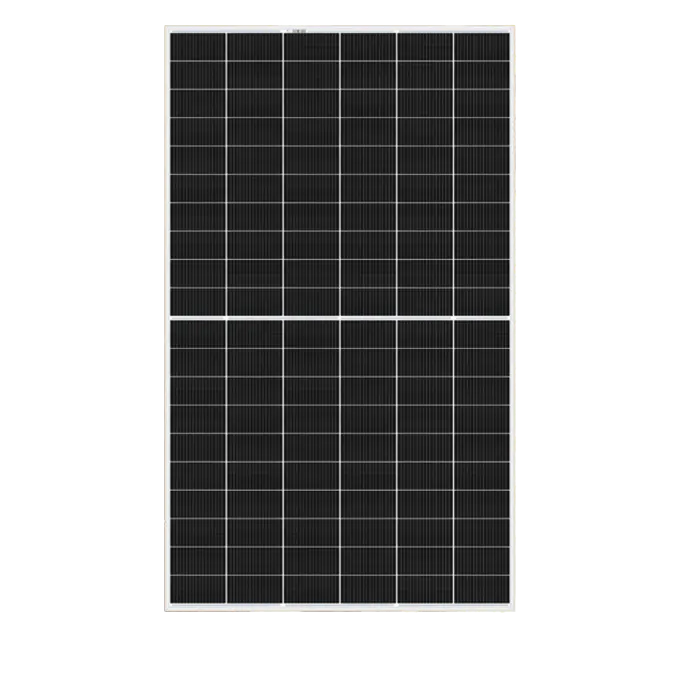
REC’s Alpha Pro-M series makes full use of bifacial HJT (heterojunction) technology. The 620 Wp power output and 21.8% efficiency are impressive figures, but its real strength is the temperature coefficient: just -0.24%/°C. This is one of the best performances in the world — and in Cyprus, where rooftops exceed 50°C in summer, that translates into stable output exactly when other panels start to struggle.
Thanks to its 120 half-cut cells, the panel performs significantly better when shaded by neighboring buildings, chimneys, or water tanks. As a result, you secure more energy on an annual basis compared to a standard single-sided panel.
Technical Specifications:
- Power: 620 Wp
- Efficiency: 21.8%
- Cell type: Bifacial HJT, 120 half-cut cells
- Temperature coefficient: -0.24%/°C
- Performance warranty: 25 years
- Dimensions: 2180 x 1310 x 30 mm
- Weight: 32.48 kg
- Best for: Commercial roofs, terraces, and industrial installations where we can take advantage of light reflection off the rear side of the panel. Its heat resistance makes it unbeatable during the summer months.
3. JINKO Tiger Neo 72HL4-BDV 590W: The Best Large-Format Bifacial Panel

The Tiger Neo 590W is Jinko’s proposal for large-scale projects. With 144 N-type monocrystalline cells and 22.84% efficiency, it’s among the most efficient bifacial panels on the market. Its high power output lets you reach your target kW with fewer panels, cutting costs on mounting structures, cabling, and labor. Both its bifacial technology and its dimensions make it one of the best choices on the market for large-scale installations.
Jinko’s HOT 2.0 technology virtually eliminates LID and LETID effects (performance losses caused by light and heat) that affect panels in their early stages of operation. With IP68-rated junction boxes and outstanding resistance to wind loads, it’s a panel built for real, demanding environmental conditions.
Technical Specifications:
- Power: 590 Wp
- Efficiency: 22.84%
- Cell type: N-type bifacial monocrystalline, 144 cells
- Temperature coefficient: -0.29%/°C
- Product warranty: 12 years
- Performance warranty: 30 years (max 1% in year 1, 0.4%/year thereafter)
- Voltage / Current (Vmp / Imp): 44.17 V / 13.36 A
- Dimensions: 2278 x 1134 x 30 mm
- Weight: 32 kg
- Best for: Ground-mount solar parks, large industrial warehouses, and projects where reducing the total panel count drastically cuts installation costs.
4. JINKO Tiger Neo 60HL4-(V) 485W: The Most Cost-Effective Solution for Homes
Not every installation needs the largest panels on the market. For a typical Cypriot home, the Tiger Neo 485W is the smartest and most practical choice: it has convenient dimensions for easy installation, relies on proven N-type technology, and comes with the same 30-year performance warranty as its more expensive counterparts.
Its efficiency (21.88%) is excellent for its class. At the same time, SMBB (smart multi-busbar) technology captures sunlight more effectively than older PERC-technology panels. It also offers top-tier resistance to salt corrosion (ideal for coastal areas) and strong winds.
Technical Specifications:
- Power: 485 Wp
- Efficiency: 21.88%
- Cell type: N-type monocrystalline, 120 cells
- Temperature coefficient: -0.29%/°C
- Product warranty: 12 years
- Performance warranty: 30 years (max 1% in year 1, 0.4%/year thereafter)
- Front glass: 3.2 mm anti-reflective tempered glass
- Dimensions: 190.6 x 113.4 x 3 cm
- Weight: 22.5 kg
- Best for: Residential systems from 5 to 10 kWp, and for installers handling multiple residential projects who want a panel that’s easy to handle with consistent dimensions.
5. REC Alpha Pure-R 410W: Top All-Black Aesthetics for Homes
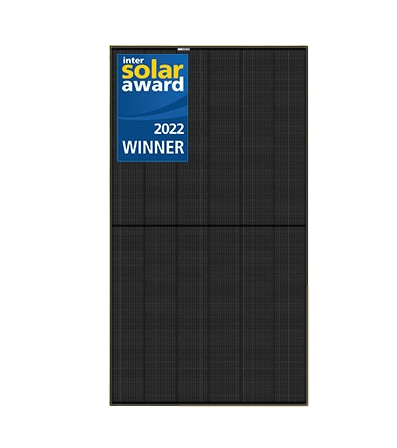
The REC Alpha Pure-R is in a class of its own. Here, it’s not about high wattage, but about cutting-edge technology and appearance. With 410 Wp of power and 22.2% efficiency, it’s the ultimate choice for homeowners who want their solar array to look beautiful and uniform on the roof, thanks to full-black technology and a gapless design with no visible gaps between cells. It also features a high starting voltage, which allows fewer panels per string to be needed to start up inverters or drivers, offering greater flexibility in system design.
It’s a completely lead-free, environmentally friendly panel with zero initial power loss (No LID). Its 25-year linear warranty is among the strictest in the world: it promises just 2% degradation in the first year and only 0.25% per year after that. As a result, in its 25th year of operation, the panel will still deliver an impressive 92% of its original output. REC Group is backed by the Reliance Industries conglomerate, which guarantees that this warranty is fully secured.
Technical Specifications:
- Power: 410 Wp
- Efficiency: 22.2%
- Cell type: REC half-cut HJT, lead-free, gapless
- Temperature coefficient: -0.24%/°C
- Performance warranty: 25 years (max 2% in year 1, 0.25%/year thereafter)
- Minimum output in year 25: 92% of rated power
- Frame: Durable black anodized aluminum
- Dimensions: 173.2 x 111.8 x 3 cm
- Weight: 21.5 kg
- Best for: Homes where roof architecture and aesthetics are a top priority, buildings that can’t accommodate heavy loads, and roofs where a more compact panel fits the space better.
6. AIKO PV Panel N-Type 475W – Bifacial: The Most Advanced Cell Technology
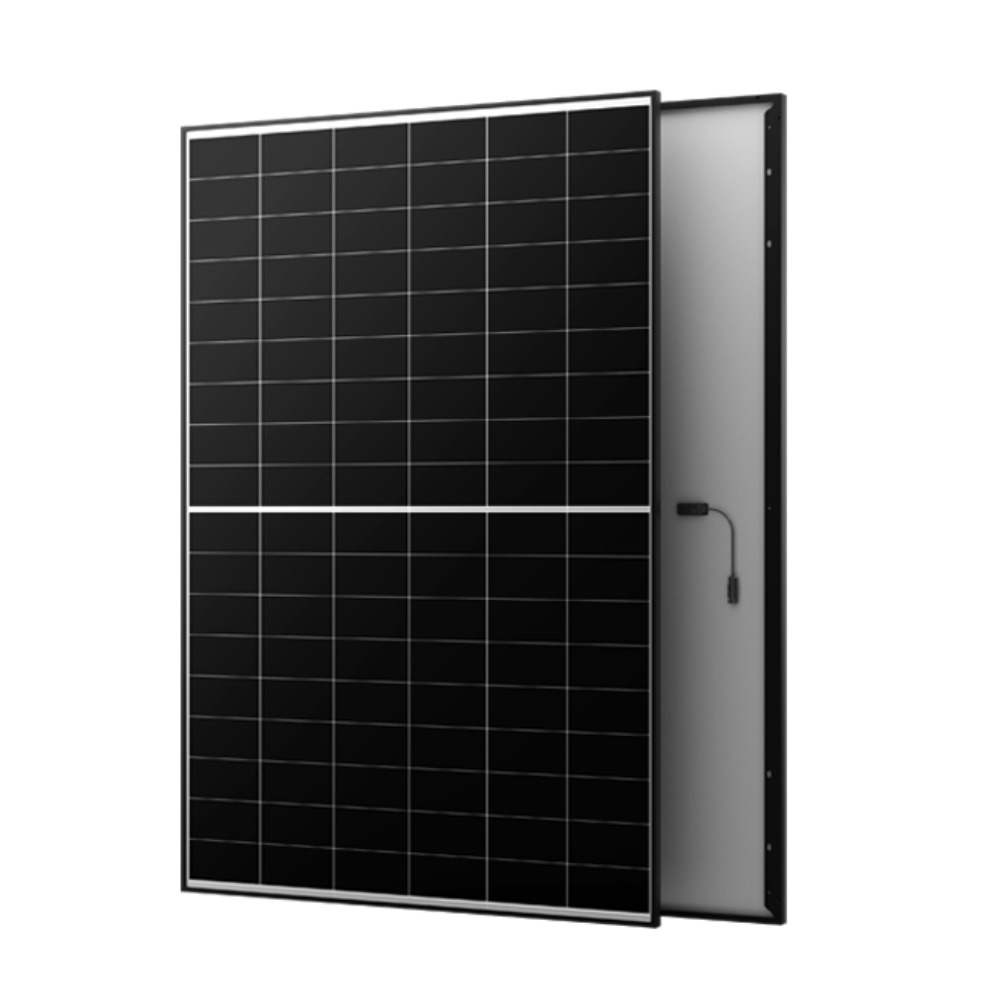
The AIKO N-Type 475W raises the bar even further with its proprietary ABC (All Back Contact) cell technology. Unlike conventional panels, all electrical contacts are located on the back of the cell, so the front surface is completely uniform, with no visible busbars or soldering lines. The result is one of the most elegant panels on the market — and also one of the most efficient, with efficiency reaching up to 23.8%.
This technology isn’t just about looks; it reduces optical and electrical losses, improves shading management, and lowers the risk of micro-cracks. The panel is also bifacial, capturing light reflected off the mounting surface for additional output.
AIKO offers a 30-year linear performance warranty, with degradation of up to 1% in the first year and just 0.35% annually through year 30 — meaning that by the end of the period, the panel still delivers at least 88.85% of its original output. The product warranty is 15 years, extendable to 25.
Technical Specifications:
- Power: 475 Wp
- Efficiency: 23.8%
- Cell type: N-type ABC (back-contact), 108 cells, bifacial
- Temperature coefficient (Pmax): -0.26%/°C
- Product warranty: 15 years (extendable to 25)
- Performance warranty: 30 years (max 1% in year 1, 0.35%/year thereafter)
- Voltage / Current (Voc / Isc): 41.24 V / 14.35 A
- Dimensions: 1757 x 1134 x 30 mm
- Weight: 24.2 kg
- Frame: Black anodized aluminum
- Best for: Homeowners who want the ultimate combination of aesthetics and high efficiency, with no visible busbars on their roof.
Which Panel Should I Choose Based on My Project?
| Need / Use Case | Best Choice | Reason |
| Limited roof space | JINKO Tiger Neo N-Type 625W | 22.18% efficiency — the most watts per m² |
| Commercial roofs & terraces | REC 620 Alpha Pro-M | Top heat resistance & bifacial design |
| Ground-mount systems (solar parks) | JINKO Tiger Neo 590W | Large bifacial format — savings on materials |
| Classic residential system | JINKO Tiger Neo 485W | Convenient size, excellent price & 30-year warranty |
| High architectural aesthetics | REC Alpha Pure-R 410W | Fully black (all-black), lead-free, minimal degradation |
| Maximum aesthetics + efficiency | AIKO N-Type 475W | ABC technology — no visible busbars, 23.8% efficiency |
What’s the Best Panel Type in 2026?
For the vast majority of installations, monocrystalline panels remain the most reliable and efficient solution. N-type panels (like the Jinko Tiger Neo series) are the evolution of older P-type panels, as they aren’t affected by initial light exposure the way older cells were, and they perform much better under Cyprus’s high temperatures.
HJT (heterojunction) technology, used by REC, takes efficiency a step further. It combines crystalline and amorphous silicon, achieving the highest efficiencies in mass production today and the best performance during heatwaves. While they cost slightly more per watt, their top-tier 25-year production warranty more than makes up for the price difference.
ABC (back-contact) technology, used by AIKO, represents the most recent advance in the field: by moving all electrical contacts to the back of the cell, it achieves both higher efficiency and a completely clean, uniform appearance with no visible busbars.
Thin-film panels have lower efficiency and are rarely used on roofs, mainly because they require huge surface areas. Their use is limited to very large industrial parks or special curved surfaces.
Finally, solar roof tiles are an attractive solution for new-build homes, as they integrate directly into the roof. However, their efficiency remains noticeably lower than classic panels, and both purchase and installation costs are still quite high.
How Panel Efficiency Affects Your Wallet
A panel’s rated efficiency tells us what percentage of solar energy is converted into electricity under ideal laboratory conditions. For example, a panel with 22% efficiency produces 220 watts per square meter.
We’re fortunate in Cyprus: according to official European Commission data (PVGIS), the island gets between 1,800 and 2,000 peak sunshine hours per year. This means a solar system in Cyprus produces almost double the energy of the same system in Northern Europe. A properly designed 5 kWp residential system in Cyprus can easily produce over 7,500 kWh annually, covering most of a family’s energy needs.
Four factors determine actual output in practice:
- Heat: When panel temperature rises above 25°C, output drops. This is where the temperature coefficient matters: REC (-0.24%/°C) and AIKO (-0.26%/°C) panels outperform Jinko (-0.29%/°C) during heatwave days.
- Degradation over time: A strong warranty ensures your system won’t quickly lose power. The REC Alpha Pure-R, with just 0.25% annual loss, offers the best durability on the market.
- Shading: Half-cut panels and bifacial panels continue generating power even if part of them is shaded by trees or nearby buildings, unlike older panel designs.
- Tilt angle: To achieve maximum output year-round in Cyprus, panels should face south with a tilt of roughly 25 to 35 degrees.
Frequently Asked Questions
What’s the difference between N-type and P-type panels?
N-type panels use phosphorus in their silicon base, while older P-type panels use boron. This change makes N-type panels far more resistant to light-induced degradation (LID) from day one. They also perform much better in heat, making them ideal for Cyprus’s warm climate. The entire Jinko Tiger Neo range, as well as the AIKO N-Type 475W, offered by Trikkis Energy use this technology.
What’s the difference between a product warranty and a performance warranty?
The product warranty covers any manufacturing defects or physical damage to the material (typically for 12 to 25 years). The performance warranty is a separate manufacturer commitment guaranteeing that power output won’t fall below a specific threshold after 25 or 30 years. This is the more important warranty, as it secures your returns over the long term. Jinko Tiger Neo panels guarantee at least 87.4% of their output in year 30, while the AIKO N-Type 475W guarantees 88.85%.
Do solar panels work on cloudy days?
Yes, output decreases but doesn’t stop. Panels generate electricity even from diffuse daylight, not just direct sunlight. REC’s HJT-technology panels are known for excellent performance on cloudy days, as their amorphous silicon layer can absorb a broader spectrum of light.
How should I compare panel costs?
Don’t just look at price per watt. A panel that costs slightly more but has better efficiency can save you money on mounting materials, cabling, and labor, since you’ll need fewer units. Also, for the Cyprus market, having an official local distributor (like Trikkis Energy) for prompt replacement or technical support is far more important than a slightly lower online price.
What are bifacial panels, and when are they worth it?
Bifacial panels generate electricity from both sides. The rear side captures light reflected off the ground or roof (the albedo effect), delivering an extra 5% to 15% output. This gain is most noticeable when panels are mounted over white roof membranes, light-colored gravel, or concrete. Conversely, over grass or dark roof tiles, reflection is minimal, so in those cases classic single-sided panels are the better choice.
Browse the full range of Trikkis Energy solar panels or contact us to design a quote for your project.